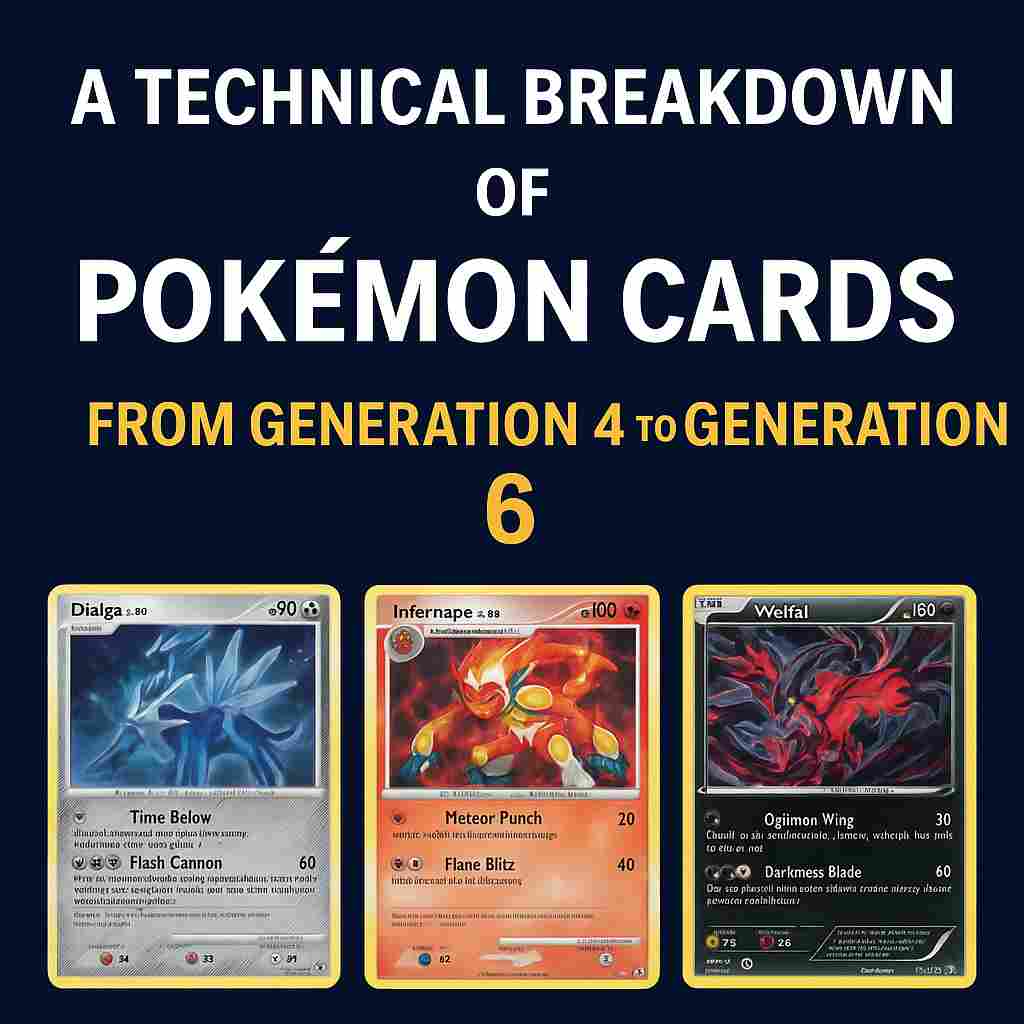
A Technical Breakdown of Pokémon Cards from Generation 4 to Generation 6
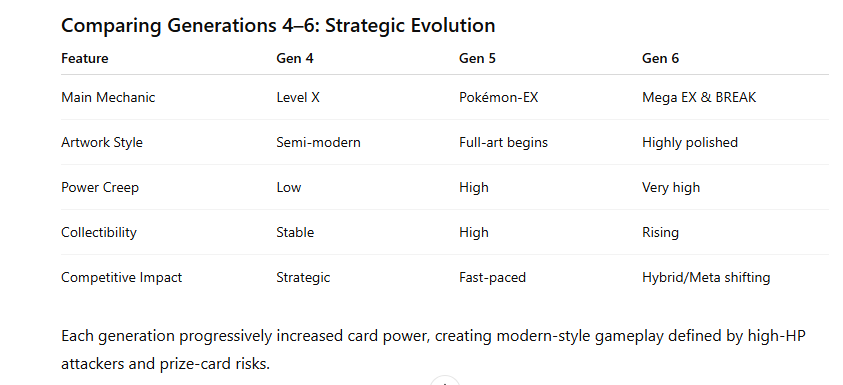
The Pokémon Trading Card Game experienced a major transformation during Generation 4 to Generation 6. These eras spanning the Diamond & Pearl, HeartGold & SoulSilver, Black & White, and XY card series introduced advanced mechanics, improved card structures, new rarity systems, and enhanced competitive play. From Level X cards in Gen 4 to EX/GX mechanics in Gen 6, this period is considered one of the most strategic chapters in TCG history.
This guide provides a detailed and analytical look at how Pokémon cards evolved from Gen 4 to Gen 6, including design philosophy, rarity progression, competitive trends, and collector value.
The Rise of Level X & Strategic Gameplay
Generation 4 brought a significant mechanical shift, especially with Level X (Lv.X) cards, which allowed players to upgrade certain Pokémon without resetting status conditions.
Featured in sets like Diamond & Pearl, Mysterious Treasures, Great Encounters, and Majestic Dawn, these cards introduced competitive complexity never seen before.
Key Gen 4 Mechanics
Level X Evolution: Placed on top of the same-named Pokémon, adding abilities and attacks.New Energy Types & Advanced Abilities: Supporters and Stadiums became more impactful in battle. More Defined Roles: Tanks, sweepers, and tech Pokémon became essential in TCG strategies.
Notable Gen 4 Cards
Lucario Lv.X,Torterra Lv.X,Palkia & Dialga Lv.X,Darkrai Lv.X,Glaceon & Leafeon Lv.X,Garchomp C Lv.X
These cards balanced offensive and defensive play, introducing energy manipulation and bench-disruption strategies. Many collectors value Gen 4 because print runs were moderate, artwork became sharper, and set variety increased.
Why Gen 4 Cards Rank High for Investors
- Level X cards are historically significant.
- Holo patterns became more refined and modern.
- Sinnoh Legendary Pokémon carry high long-term popularity.
The XY Era and Introduction of Mega Evolution, EX, and Early GX Cards
Generation 6 brought one of the biggest shifts in TCG design philosophy with the introduction of Mega Evolution Pokémon, new EX mechanics, and early GX design elements that would later dominate Gen 7.
Mega Evolution Cards (M-EX)
Mega Pokémon like M Charizard EX and M Rayquaza EX delivered extreme power at the cost of ending your turn after Mega Evolving. This risk-reward strategy reshaped competitive play.Famous Mega EX cards include,M Charizard EX (X and Y versions),M Blastoise EX,M Venusaur EX,M Lucario EX,M Gardevoir EX.
Fairy Type Introduction
For the first time, a new TCG type Fairy was added, represented with a pastel-pink card border. Pokémon like Xerneas and Sylveon became staples of Fairy-type decks thanks to support cards like Fairy Garden.
Pokémon has evolved over time with new regions, starters, and legendaries, which is why fans view each generation differently, whether it’s about pokemon starters each generation, first generation pokemon starters, second generation pokemon starters, generation 5 starter pokemon, generation 6 pokemon starters, generation 9 starters, or every generation starter pokemon.
All the pokemon games by generation, pokemon generation release dates, and pokémon games in order of generation have introduced regions like the pokemon generation 3 region, generation 4 region, and pokemon generation 9 region. Fans especially loved third generation pokemon, generation 3 electric pokemon, and generation 3 legendary pokemon, while some believe that a worst pokemon generation also exists. Generation 1 and 2 pokemon, pokemon in generation 2,
Break Cards (BREAK Evolution)
Later in XY, break cards introduced horizontal gold-style evolutions that enhanced stats without removing previous abilities. Notable BREAK cards,Greninja BREAK,Zoroark BREAK,Raichu BREAK
and generation 2 pokemon games are symbols of nostalgia, where titles like pokemon crystal, pokemon heartgold, and the pokemon generation 2 remake became popular, especially with the arrival of legendary pokemon generation 2 and pokemon generation 2 legendaries. Similarly, the popularity of generation 4 starters, generation 4 legendary pokemon, and generation 4 pokemon cards is still strong. The 5th generation, with black and white generation pokemon,
what generation is pokemon black and white, pokémon generation 5, and generation 5 legendary pokemon, set new standards. The 6th generation introduced pokemon x and y generation, generation 6 pokemon games, generation 6 pokemon starters, generation 6 mythical pokemon, and generation 6 legendary pokemon, while the 7th generation brought pokemon sun and moon generation, pokemon moon generation, pokemon sun moon generation, generation 7 legendaries, and generation 7 pokemon.
Early GX Framework
While official “GX” branding started in Gen 7, XY introduced the building blocks for high-HP, high-power modern Pokémon.
The 8th generation introduced 8th generation pokemon, generation viii pokemon, generation eight pokémon, and games like pokemon sword, and now everyone has waited for the latest generation of pokemon, pokemon generation ix, ninth generation pokemon, new generation 9 pokemon, and the pokemon generation 9 release date
Artwork & Rarity Advancements in Gen 6
Textured full arts became standard,Secret rare cards gained gold borders,Mega cards featured bold Japanese-style lettering,Energetic holo patterns defined the XY era.Collectors appreciate Gen 6 for its visual evolution and for bridging the gap between vintage EX cards and modern high-rarity formats.
For collectors, pokemon cards 1st generation, 1st generation pokemon card packs, all generation 1 pokemon cards,
2nd generation pokemon cards, second generation pokemon cards, generation pokemon cards,
and pokemon first generation packs have always been valuable, along with the popularity of first generation legendary pokemon
generation 1 legendary pokemon, and legendary pokemon generation 1. Many people follow pokemon every generation, each generation of pokemon, pokemons by generation, pokemon generation chart,
Collector & Investor Insights
Collectors interested in Gen 4–6 should consider:
Rarity Priority
- Level X cards
- Full-art EX cards
- Mega EX
- Gold Secret Rares
- Legendary Pokémon cards
- Low-print early XY cards
Condition Sensitivity
Full-art EX cards from Gen 5–6 scratch easily, making PSA 10 copies more valuable.
Long-Term Growth Factors
- High nostalgia (Sinnoh, Unova, Kalos fans)
- Early-era full arts increasing demand
- Competitive history significance
Conclusion
what generation is pokemon sapphire, what generation is pokemon diamond, what generation is pokemon fire red, what generation is pokemon legends arceus,
or what generation pokemon are we on, closely follow the evolution of all generations.
pokemon fire red generation, pokemon ruby generation, pokemon generation 3 remake, pokemon generation 4 remake,
and the pokemon generation 5 release date. Each generation’s starters, legendaries, mythical Pokémon, and type charts such as pokemon generation 1 type chart, pokemon type chart generation 6, generation 1 fire pokemon, generation 1 grass pokemon, and ghost pokemon generation 1 make the Pokémon universe even richer.
Today, fans still enjoy all pokemon from generation 3, all pokemon generation 1, all pokemon generation 9, and all pokemon generation games, while many collect all generation starters pokemon, every generation pokemon starters, and each pokemon generation starters. This is why Pokémon has become a timeless franchise for every age group around the world.
Frequently Asked Questions